
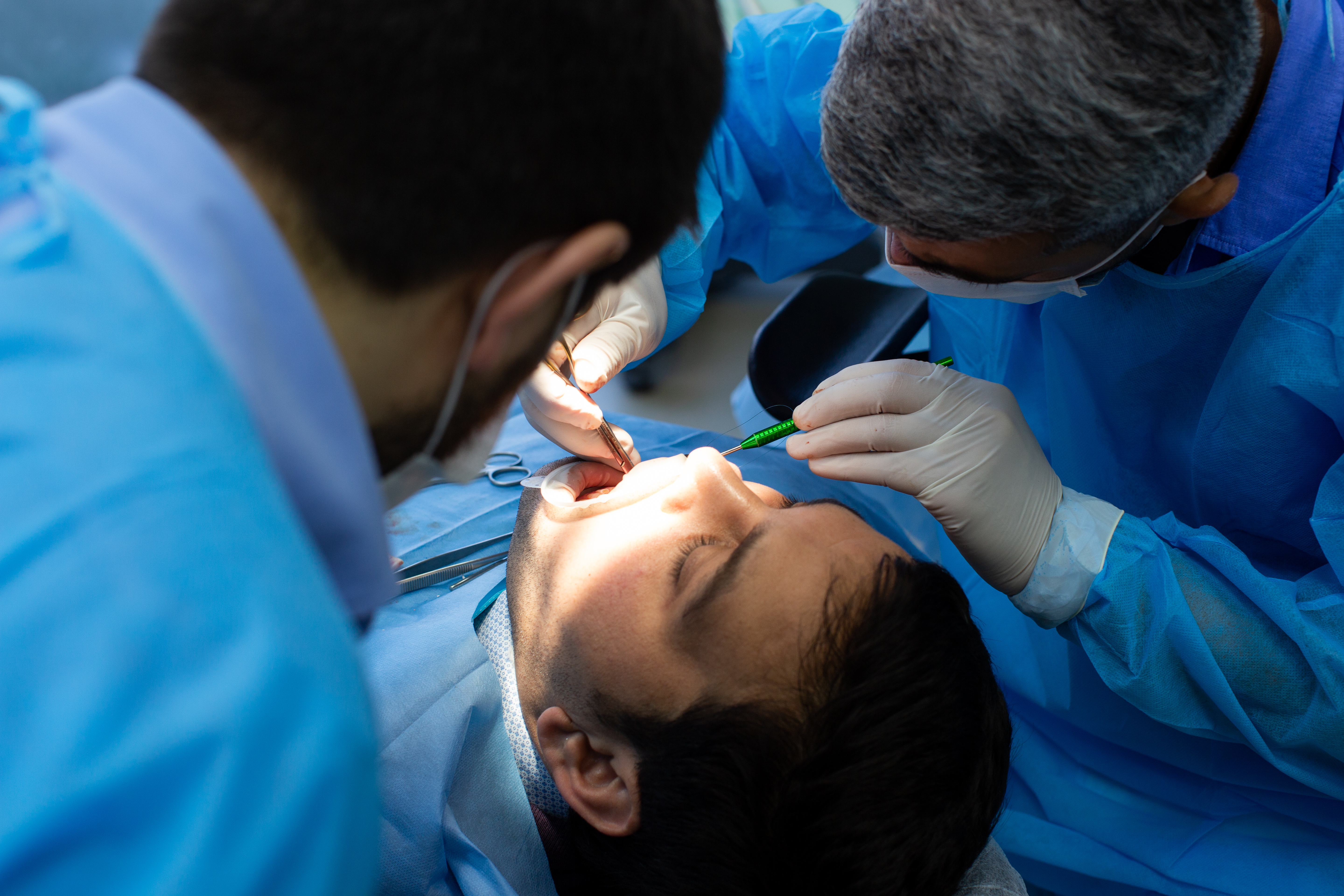
When Is a Surgical Extraction Necessary?
While our primary goal is always to preserve your natural teeth, there are situations where removing a tooth is the safest way to eliminate severe infection, protect neighboring teeth, or relieve intractable pain.
A surgical extraction is typically required when a tooth has broken off at or below the gumline, has curved or brittle roots, or is severely impacted within the jawbone. Our gentle surgical approach prioritizes preserving surrounding bone and soft tissue for faster recovery.
Atraumatic Tissue Preservation
Specialized micro-instruments protect surrounding jawbone and gums for minimal swelling.
Complete Pain Management
Profound local anesthesia ensures you experience zero sharp pain or discomfort during surgery.
3D CBCT Surgical Planning
Pre-op 3D digital imaging maps exact nerve paths and root structures to avoid complications.
Socket Preservation & Healing
Immediate bone grafting options available to prepare the area for future dental implant placement.
The Surgical Extraction Process
Pre-Operative Radiographs & Planning
Digital X-rays or 3D scans evaluate the tooth roots, nerve anatomy, and jawbone density.
Profound Numbing & Sedation
Local anesthetic is administered to ensure complete numbness before any surgical work begins.
Gentle Tooth Sectioning & Removal
If needed, the tooth is sectioned into smaller pieces to allow smooth, pressure-free removal without bone damage.
Dissolvable Sutures & Aftercare Kit
The socket is cleaned, sealed with self-dissolving stitches, and you receive comprehensive home care instructions.
“Had a complex extraction done by Dr. Gill. He explained everything step-by-step and the tooth was removed before I even realized it! Post-op recovery was quick with clear instructions.”