
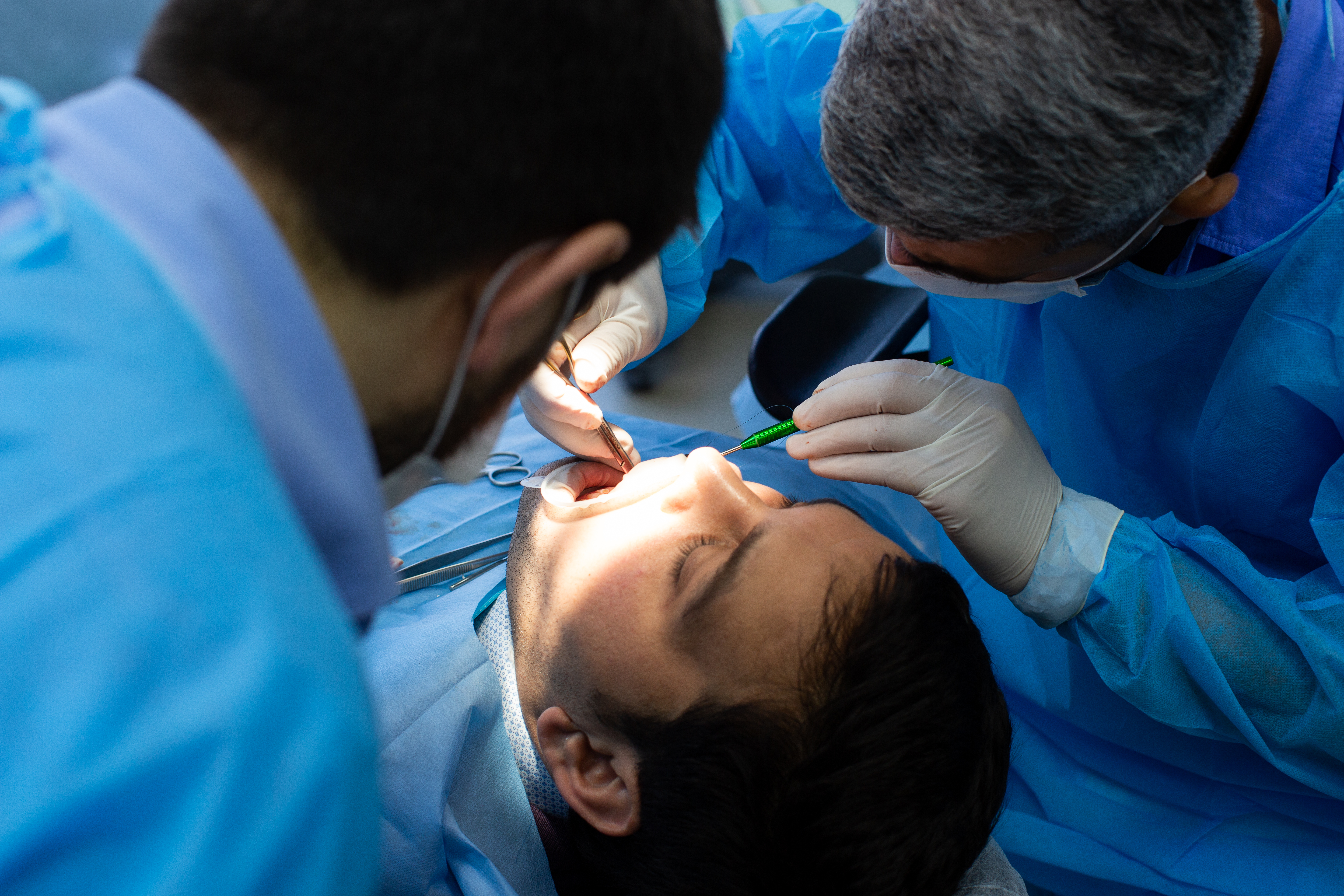
About Surgical Extractions
While preserving natural teeth is often preferred, removal may be recommended when a tooth is severely damaged, affected by extensive decay or causing ongoing problems.
A surgical extraction may be necessary when a tooth has broken at or below the gumline, is difficult to access, or has roots or positioning that make a straightforward extraction unsuitable. Your dentist will assess the tooth and surrounding structures, explain the procedure and discuss the risks and expected recovery before treatment.
Atraumatic Tissue Preservation
Specialized micro-instruments protect surrounding jawbone and gums for minimal swelling.
Comfort Options Discussed
Profound local anesthesia ensures you experience zero sharp pain or discomfort during surgery.
3D CBCT Surgical Planning
Pre-op 3D digital imaging maps exact nerve paths and root structures to avoid complications.
Socket Preservation & Healing
Immediate bone grafting options available to prepare the area for future dental implant placement.
The Surgical Extraction Process
Assessment & Treatment Planning
Your dentist will examine the tooth and may take dental X-rays to assess its position, roots and surrounding structures before planning the extraction.
Local Anaesthetic
Local anaesthetic is used to numb the area before treatment. Your dentist will explain what to expect and answer any questions you have about the procedure.
Surgical Removal
Depending on the tooth, the dentist may need to make a small incision in the gum or divide the tooth into sections to assist with removal.
Aftercare & Recovery
After the extraction, your dentist will provide instructions on caring for the area, managing discomfort and reducing the risk of complications during healing.
Important Surgical Risk Information
This surgical service carry potential risks, including pain, swelling, bleeding, infection, delayed healing and possible damage to nearby structures. Depending on the procedure, nerve injury, dry socket or other complications may occur.
Individual risks and outcomes vary. Your dentist will discuss the potential benefits, risks and alternatives with you before treatment. Informed consent will be obtained before proceeding.